StealthTech


AutoCAD remains the backbone of architectural and engineering design — the most widely used CAD software for modeling, drafting, and project visualization. But as projects have grown larger, teams more distributed, and workflows more data-intensive, the limitations of traditional infrastructure have become impossible to ignore.
Complex 3D models, multi-user environments, and continuous revisions place immense strain on local servers and workstations. Lag, system crashes, and rendering delays can quickly cascade into missed deadlines and escalating costs. In today’s high-stakes design landscape, downtime is not just an inconvenience — it’s a direct threat to profitability and client trust.
That’s where AI-powered hosting comes in. By merging artificial intelligence with cloud infrastructure, firms can unlock a new era of performance optimization — one where AutoCAD runs faster, scales effortlessly, and operates continuously, without interruptions.
At Stealth Technology Group, we help architecture and engineering firms transition from hardware limitations to intelligent, self-optimizing hosting environments. Our AI systems analyze workloads, predict performance demands, and allocate resources in real time — ensuring AutoCAD operates at peak performance, 24/7.
1. The Modern CAD Challenge: Why Performance Is Now Strategic
In architecture and engineering, software speed directly impacts project timelines and profit margins. Every second of lag or downtime compounds across teams, reducing productivity and increasing operational costs.
According to Autodesk’s State of Design & Make Report 2024, over 68% of firms cite performance issues as a top barrier to design efficiency. Larger models, more complex geometries, and collaborative workflows have outpaced the capabilities of traditional desktop hardware.
These challenges are particularly acute in distributed design environments. As teams collaborate across geographies, large DWG files must synchronize constantly, and any delay can interrupt entire workflows. Additionally, hybrid work has made secure remote access a baseline requirement — one that legacy IT systems struggle to deliver efficiently.
Performance is no longer a technical concern; it’s a strategic one. Firms that cannot maintain uptime lose momentum, billable hours, and client confidence.
AI hosting resolves this by transforming performance management from reactive troubleshooting to proactive optimization.

2. From Hardware Limits to Intelligent Infrastructure
For decades, AutoCAD performance was dictated by the limitations of local hardware — bound by processor speed, memory allocation, and manual configuration. That era is rapidly ending. Today’s architectural and engineering workloads demand an infrastructure that adapts as quickly as the designs themselves. Large-scale BIM models, point clouds, and high-fidelity renderings are far too demanding for fixed-capacity workstations, and frequent hardware upgrades have become both financially wasteful and operationally unsustainable.
AI hosting replaces that reactive model with intelligent, adaptive infrastructure. Rather than relying on static hardware, AI AutoCAD hosting delivers dynamic computational power that expands or contracts in real time based on system demand. As a result, firms no longer experience bottlenecks during peak workloads or idle resources during low-use periods. Every function — from drafting to rendering — receives precisely the resources it needs, exactly when it needs them.
Stealth’s AI infrastructure continuously measures performance metrics such as GPU utilization, input/output latency, and user behavior across live sessions. Machine learning algorithms process this data to predict system demands before they occur, automatically balancing power and optimizing responsiveness. The result is a self-adjusting environment where AutoCAD runs faster, scales smarter, and performs seamlessly across every project phase.
By removing physical constraints, firms transition from costly hardware maintenance to a cloud ecosystem that is always current, always optimized, and infinitely scalable. For the modern design studio, this represents not just a technical upgrade, but a strategic redefinition of how performance is delivered.
3. AI Hosting: The Engine Behind Continuous Performance
The defining difference between traditional cloud hosting and AI AutoCAD hosting is intelligence. While conventional hosting provides raw computational capacity, AI hosting transforms that capacity into a predictive, self-regulating performance engine. It continuously learns from operational data — system loads, rendering activity, collaboration frequency — and applies that knowledge to enhance efficiency without human intervention.
Every AutoCAD instance within Stealth’s AI ecosystem operates as part of a unified network. When one user experiences high GPU demand during a rendering sequence, the system recognizes the behavior pattern, preemptively scales up resources, and distributes computational load across available nodes. Similarly, when network congestion is detected, AI dynamically reroutes traffic through optimized data paths to preserve low-latency connectivity.
Unlike traditional IT responses, these optimizations occur before issues manifest. AI detects patterns invisible to human administrators — irregular frame drops, micro-stutters, or delayed file writes — and applies corrective measures instantly. Over time, these algorithms grow smarter, continually refining their predictive accuracy with each data cycle.
This intelligent orchestration transforms AutoCAD from a workstation-dependent tool into a fully managed design ecosystem. It eliminates the friction between software and infrastructure, ensuring that performance remains constant no matter how complex the model or how many users are connected. For firms accustomed to juggling upgrades, patches, and troubleshooting tickets, this marks a fundamental shift — from maintenance to momentum.
4. Predictive Optimization: Eliminating Downtime Before It Happens
In traditional IT environments, downtime is treated as an inevitable cost of doing business. Servers slow down, systems crash, and users report problems that must then be resolved manually. Predictive optimization changes that reality entirely.
Through continuous monitoring, AI learns the rhythm of each design team’s workflow — when rendering peaks occur, which users trigger the heaviest load, and what factors typically precede lag events. Using this data, AI anticipates disruptions before they happen, reallocating computational resources to maintain stability and throughput.
For example, if AutoCAD performance metrics indicate an approaching resource strain during a large model export, AI automatically provisions additional GPU memory and compute bandwidth. If storage I/O latency increases due to multiple concurrent saves, the system preemptively caches critical files to faster virtual drives. These actions occur silently, in the background, preserving continuity without human intervention.
The impact is profound. Predictive optimization eliminates costly downtime, preserves user productivity, and ensures consistent responsiveness — even during high-intensity workflows. According to Engineering.com’s 2024 CAD Productivity Benchmark, firms that adopted AI-hosted CAD environments experienced an average 72% reduction in workflow interruptions compared to traditional setups.
For architecture and engineering firms, predictive AI becomes more than a performance safeguard — it becomes a strategic asset, enabling uninterrupted creativity and operational reliability.
5. Real-Time Collaboration in the Cloud
In a profession where collaboration is essential, distributed design environments can easily become fragmented. Multi-user editing, remote coordination, and version control often create bottlenecks that slow projects and introduce risk. AI hosting resolves these pain points by unifying collaboration through real-time synchronization and intelligent data management.
With AI-driven cloud performance, every team member accesses the same version of a model simultaneously, regardless of location or device. The system continuously monitors and validates changes, ensuring that design data remains consistent across all contributors. When multiple users make concurrent edits, AI merges modifications seamlessly, eliminating the version conflicts that once plagued distributed workflows.
Moreover, the system uses predictive caching to anticipate which model elements will be needed next — reducing load times and preventing latency during collaborative sessions. By analyzing usage behavior, AI intelligently prioritizes bandwidth allocation, allowing architects and engineers to interact with shared 3D environments as if they were working locally.
The result is a unified, borderless workspace that fosters creativity and cohesion. Teams no longer worry about file corruption or data misalignment; every interaction is synchronized, secure, and optimized for performance. Collaboration ceases to be a logistical challenge and becomes an operational advantage — one powered by intelligence and maintained without compromise.
6. Security and Compliance in an Always-Connected Environment
As AutoCAD environments move to the cloud, data security becomes paramount. Design files often contain sensitive client information, intellectual property, and proprietary methods.
AI-driven hosting architecture protects this data through predictive cybersecurity. Machine learning models monitor access logs, user behavior, and file activity to detect anomalies — such as irregular download times, unauthorized sharing, or unusual IP addresses.
Upon detecting potential threats, AI initiates real-time response protocols: isolating affected sessions, revoking credentials, or activating multi-factor verification.
Integrated security features include:
- Continuous behavioral monitoring and anomaly detection.
- Automated compliance tracking aligned with SOC 2, ISO 27001, and GDPR.
- End-to-end encryption for both stored and transmitted data.
- Self-healing network nodes that adapt to attempted intrusions.
AI transforms security from a static checklist into a living, intelligent shield — one that evolves faster than cyber threats.
7. Cost Efficiency and Sustainability Through Intelligent Scaling
High-performance computing traditionally comes with high costs. Firms often overinvest in hardware to accommodate rare peak demand periods — leaving expensive equipment underutilized most of the year.
AI hosting solves this with elastic scalability. The system expands or contracts in real time, aligning resource consumption with actual project needs.
- During heavy rendering workloads, additional GPU and CPU instances activate instantly.
- When demand subsides, unused resources automatically scale down.
- Billing reflects actual usage, not fixed hardware capacity.
This model reduces capital expenditure (CapEx) by replacing hardware ownership with a predictable operating expense (OpEx). Moreover, AI optimization contributes to sustainability by reducing energy waste. Cloud workloads are distributed to the most efficient data centers based on energy availability and carbon impact — supporting firms’ ESG objectives.
In a study by McKinsey Digital Infrastructure Insights 2024, AI-enabled scaling achieved up to 35% reduction in energy consumption across cloud-hosted design applications.
AI hosting is not only efficient — it’s environmentally responsible.
8. Empowering Designers Through AI Performance Insights
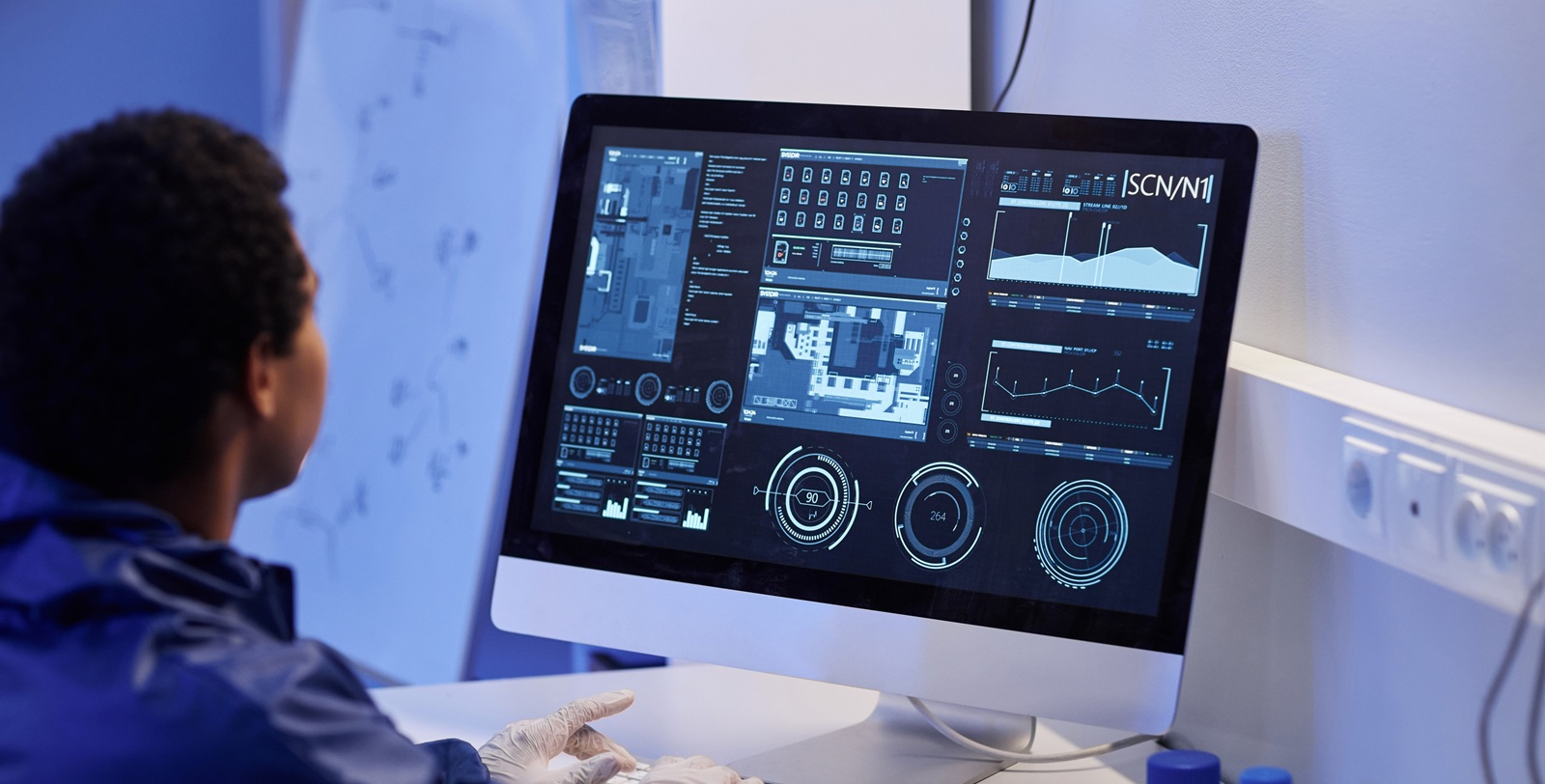
AI doesn’t just automate — it illuminates. Through advanced analytics and real-time dashboards, design teams gain unprecedented visibility into how AutoCAD is performing across every user, session, and workflow. These intelligent monitoring systems transform performance data into actionable intelligence, revealing exactly how computing resources are utilized and where optimization opportunities lie.
By analyzing metrics such as rendering duration, GPU and CPU utilization, bandwidth efficiency, and latency trends, AI converts raw performance telemetry into a precise operational picture. This clarity allows design managers to make informed, data-backed decisions — reallocating resources during peak workloads, balancing team assignments for greater efficiency, and identifying the skill or system gaps that quietly impact productivity.
What was once guesswork becomes measurable insight. Instead of waiting for complaints about slow systems or unexpected lag, teams can now visualize performance trends, anticipate stress points, and fine-tune workflows before they hinder output. AI’s transparency turns infrastructure management into a data-driven discipline — one where system optimization is continuous, evidence-based, and directly aligned with project performance goals.
Ultimately, AI in architecture and engineering makes every layer of infrastructure transparent, accountable, and intelligently adaptable. Firms no longer have to manage technology reactively; they can lead with clarity, precision, and foresight.
9. Implementation: Transitioning to AI-Powered Hosting Seamlessly
Adopting AI hosting for AutoCAD doesn’t require overhauling existing operations. Through Stealth’s phased migration framework, firms transition smoothly while maintaining workflow continuity.
Step 1: Infrastructure Audit
Assess network capacity, security posture, and current software dependencies.
Step 2: Integration Mapping
Define data flows between AutoCAD, project management systems, and collaboration tools.
Step 3: Cloud Deployment
Migrate AutoCAD instances to AI-enabled virtual environments optimized for rendering and multi-user performance.
Step 4: Performance Calibration
AI engines analyze usage patterns to configure ideal scaling thresholds and predictive triggers.
Step 5: Training and Enablement
Teams receive guidance on interpreting performance analytics and using the AI dashboard effectively.
Step 6: Continuous Learning
AI models evolve with each project, improving accuracy and optimization with time.
This stepwise process ensures minimal disruption and measurable ROI from day one.
10. The Future of CAD Performance: Designing Without Limits
The integration of AI into AutoCAD hosting represents more than a performance upgrade — it’s the foundation for the next generation of design intelligence. Future-ready firms are already leveraging predictive AI not only to optimize system resources but to assist in design logic itself — automatically testing thousands of configurations to find the most efficient solutions.
As AI in architecture and engineering continues to advance, AutoCAD will evolve into a fully adaptive environment — one that self-optimizes for speed, precision, and sustainability. At Stealth Technology Group, our mission is to build that future — enabling every design professional to work without friction, limits, or downtime.
By integrating AI performance optimization, predictive security, and elastic scalability into one seamless platform, we’re redefining what “high-performance AutoCAD” means. The firms that embrace this transformation today will lead the industry tomorrow — not by working harder, but by working intelligently.
Summary
Artificial intelligence is redefining the infrastructure that underpins modern design. For AutoCAD professionals, it delivers what once seemed unattainable — uninterrupted performance, zero latency, and total freedom from hardware limitations.
With AI AutoCAD hosting, firms gain predictive control over performance, real-time optimization across every workflow, and infinitely scalable resources that evolve in sync with project complexity. The result is an operational ecosystem that doesn’t pause, falter, or compromise — a design environment built for perpetual momentum.
At Stealth Technology Group, we engineer the intelligence that empowers this evolution. Our AI-driven hosting architecture transforms efficiency from a temporary advantage into a lasting competitive edge — where uptime becomes absolute, collaboration seamless, and innovation continuous.
Design faster. Perform smarter. Build without boundaries.