Michael Bannach


Artificial intelligence has evolved far beyond simple automation tools and data analytics systems. A new generation of technology is emerging that has the potential to fundamentally transform how businesses operate. These systems, known as AI agents, are capable of performing complex tasks, making decisions, and interacting with digital environments in ways that closely resemble human work. For many organizations, AI agents are becoming the next digital employees.
Unlike traditional software programs that follow rigid instructions, AI agents can interpret information, learn from data, and complete tasks autonomously. They can manage workflows, analyze large volumes of information, communicate with users, and even coordinate with other systems to achieve business objectives. This shift represents a major step forward in digital transformation.
Businesses are increasingly exploring how AI agents can enhance productivity, improve decision-making, and reduce operational inefficiencies. These intelligent systems can handle tasks that once required significant human effort, allowing employees to focus on strategy, creativity, and customer relationships.
As technology continues to advance, AI agents are expected to become essential components of modern business operations, acting as digital teammates that support and enhance human work.
Understanding AI Agents in the Business Environment
AI agents are intelligent software systems designed to perform tasks independently within digital environments. Unlike traditional automation tools that rely on fixed rules, AI agents can adapt to new information, analyze data patterns, and make decisions based on changing circumstances.
These systems typically combine several advanced technologies, including machine learning, natural language processing, and data analytics. Together, these capabilities allow AI agents to interpret information, communicate with users, and perform complex tasks across business systems.
For example, an AI agent might monitor incoming customer inquiries, analyze the content of each message, and automatically provide responses or route the issue to the appropriate department. Another AI agent could monitor financial data and identify unusual patterns that might indicate fraud or operational inefficiencies.
One of the most important characteristics of AI agents is autonomy. While they operate within defined parameters, they do not require constant human supervision. They can analyze situations, determine appropriate actions, and execute tasks independently. AI agents also improve over time through continuous learning. As they process more data and interact with business systems, their ability to perform tasks accurately and efficiently increases.
Businesses often deploy AI agents within specific operational areas such as customer service, marketing, financial analysis, or IT support. However, as these technologies become more advanced, organizations are beginning to integrate them across multiple departments. The result is a new operational model where AI agents function as digital employees, supporting human teams and enhancing overall productivity.
How AI Agents Differ from Traditional Automation
Many organizations already use automation technologies to streamline repetitive tasks. However, AI agents represent a significant evolution beyond traditional automation systems. Traditional automation relies on predefined rules and scripts. These systems execute tasks exactly as programmed, which works well for simple processes such as sending notifications or processing standardized data entries. However, they struggle when faced with unexpected inputs or complex decision-making scenarios.
AI agents, on the other hand, operate with a much higher level of intelligence and adaptability. They can interpret unstructured information, learn from previous interactions, and adjust their actions based on context. For instance, a traditional automation tool might send a fixed response to every customer inquiry, while an AI agent can analyze the content of each message and provide personalized responses.
Another difference lies in decision-making capabilities. AI agents can evaluate multiple data sources simultaneously and recommend actions based on predictive insights. This ability allows businesses to automate not only routine tasks but also more sophisticated processes such as demand forecasting, fraud detection, or customer behavior analysis.
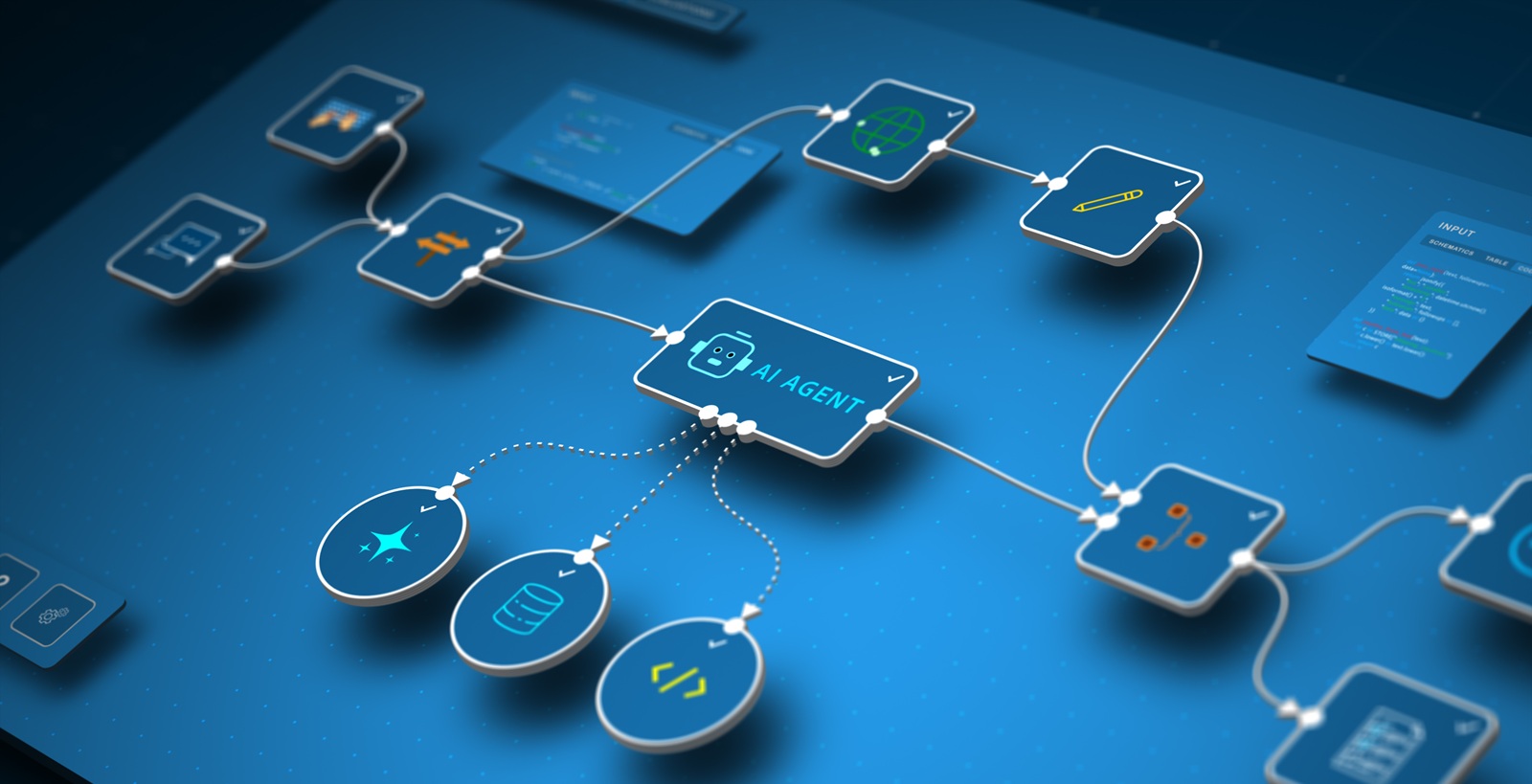
AI agents also integrate more easily with modern digital ecosystems. They can interact with cloud platforms, APIs, enterprise software systems, and databases to perform tasks across multiple applications. This flexibility allows organizations to create intelligent workflows where AI agents coordinate with existing business tools. As a result, AI agents represent a new generation of automation technology capable of supporting more advanced business operations.
Key Business Functions Where AI Agents Deliver Value
AI agents are rapidly expanding into many areas of business operations, providing measurable improvements in efficiency and productivity. Customer service is one of the most common applications. AI agents can respond to customer inquiries instantly, analyze support requests, and guide users through troubleshooting processes. By handling routine questions, they allow human representatives to focus on more complex issues.
Marketing teams also benefit from AI agents that analyze customer behavior, optimize campaigns, and generate insights into audience preferences. These systems can monitor engagement metrics and adjust marketing strategies automatically. Sales operations are another area where AI agents provide value. Intelligent systems can evaluate incoming leads, prioritize high-value prospects, and recommend personalized outreach strategies.
Financial departments use AI agents to monitor transactions, analyze spending patterns, and detect anomalies that may indicate fraud or accounting errors. Human resources teams deploy AI agents to assist with recruitment, resume screening, and employee onboarding processes.
IT departments also rely on AI agents for system monitoring and incident response. These systems can detect performance issues, troubleshoot technical problems, and recommend solutions automatically. Across these functions, AI agents act as intelligent assistants that help teams operate more efficiently while reducing administrative workload.

Building an AI Agent Strategy for Your Business
Implementing AI agents successfully requires careful planning and strategic alignment with business goals. The first step involves identifying processes that can benefit from intelligent automation. Businesses should analyze workflows to determine where repetitive tasks, large data analysis requirements, or complex decision-making processes occur.
Once potential use cases are identified, organizations must ensure that their data infrastructure supports AI systems. AI agents rely heavily on structured data to generate insights and perform tasks effectively. Businesses should also evaluate existing technology systems to ensure compatibility with AI tools. Integration with cloud platforms, databases, and enterprise software is essential for AI agents to function efficiently.
Employee training and organizational readiness are also critical. Teams must understand how AI agents will support their work and how to collaborate with these systems effectively. Security and governance policies must also be established to ensure that AI agents operate responsibly and within regulatory guidelines.
When businesses approach AI implementation strategically, they can build intelligent digital workforces that enhance productivity and innovation.
Benefits of AI Agents as Digital Employees
Organizations that adopt AI agents often experience significant improvements in operational performance. One of the most immediate benefits is increased productivity. AI agents can perform tasks continuously without fatigue, allowing businesses to operate more efficiently.
Cost efficiency is another major advantage. By automating routine tasks, organizations reduce the need for additional staffing while improving service capacity. AI agents also enhance decision-making by analyzing large volumes of data and identifying patterns that may not be immediately visible to human analysts.
Customer experiences improve as well. AI agents can provide instant responses, personalized recommendations, and consistent service across multiple channels. Scalability represents another important benefit. As business operations expand, AI agents can handle increasing workloads without requiring major infrastructure changes.
These advantages make AI agents powerful tools for organizations seeking to operate more efficiently in competitive markets.
Challenges and Considerations When Deploying AI Agents
Despite their benefits, implementing AI agents requires thoughtful planning and responsible governance. Data privacy remains a major concern. Businesses must ensure that AI systems handle sensitive information securely and comply with relevant regulations. Integration complexity can also present challenges. Organizations often operate multiple technology systems, and ensuring seamless integration with AI platforms requires careful planning.
Ethical considerations are also important. AI systems must be designed to operate transparently and avoid biased decision-making. Businesses must also manage employee concerns regarding automation. Clear communication helps teams understand that AI agents are intended to support human work rather than replace it.
Continuous monitoring and evaluation ensure that AI systems remain aligned with business objectives. By addressing these challenges proactively, organizations can implement AI agents successfully while maintaining trust and operational integrity.
The Future of AI Agents in Business
AI agents are expected to become increasingly sophisticated as artificial intelligence technologies continue to evolve. Future systems will likely possess stronger reasoning capabilities, enabling them to manage more complex business tasks. Collaboration between multiple AI agents may also become common, allowing digital systems to coordinate across departments and workflows. Advances in natural language processing will enable AI agents to communicate more naturally with employees and customers.
As businesses integrate AI agents more deeply into their operations, these systems will play a growing role in strategic planning, analytics, and operational management. Organizations that begin experimenting with AI agents today will be better positioned to leverage these advancements in the years ahead.
Conclusion: Preparing for the Era of Digital Employees
Artificial intelligence is transforming how businesses operate, and AI agents represent the next stage in this evolution. By acting as intelligent digital employees, these systems allow organizations to automate complex tasks, analyze information more effectively, and operate with greater efficiency.
Businesses that adopt AI agents strategically can unlock new levels of productivity while empowering employees to focus on higher-value activities. Stealth Technology Group helps organizations integrate AI analytics, predictive intelligence, and advanced data-driven workflows into their operations. By supporting architecture, engineering, and construction firms with innovative technology solutions, the company enables businesses to harness the power of intelligent automation.
Organizations looking to explore the potential of AI agents can benefit from expert guidance and strategic implementation. To learn how AI-powered solutions can transform your business operations, contact Stealth Technology Group today at (617) 903-5559 or visit the website to contact us and begin building the digital workforce of the future.