Michael Bannach


Architecture and engineering have always been disciplines defined by precision — where millimeters matter and errors carry immense cost. Yet, in today’s complex construction and infrastructure environments, traditional design workflows face new levels of uncertainty. From fluctuating material quality and environmental shifts to human oversight and tight timelines, even the smallest inefficiency can cascade into failure.
The evolution of AI predictive design marks a revolutionary shift in how firms approach these challenges. No longer must engineers wait for structural issues or performance inefficiencies to appear during testing or construction. With artificial intelligence, these risks can be forecasted, quantified, and corrected — often before they even exist.
At Stealth Technology Group, we bring this transformation to life. Our predictive infrastructure analytics platform empowers architects and engineers to simulate performance conditions, analyze millions of data points, and anticipate weaknesses early in the lifecycle. By combining real-time data collection, AI modeling, and advanced forecasting, we transform uncertainty into insight — allowing teams to design smarter, safer, and faster than ever before.

1. The Evolution of Predictive Intelligence in Design
The architecture, engineering, and construction (AEC) sector is inherently risk-prone. Historically, risk management has been reactive: design, test, identify failure points, and then revise. This approach, while effective decades ago, no longer aligns with the velocity or complexity of modern infrastructure projects.
The introduction of AI predictive analytics has flipped this paradigm. Instead of analyzing past failures to inform future fixes, systems now anticipate potential risks during the design stage itself. Using historical data, material behavior records, and real-time sensor feedback, AI builds a probabilistic understanding of how every design choice might behave under real-world conditions.
For example, predictive algorithms can analyze thousands of historical bridge load patterns and automatically forecast the lifespan of similar new structures. Structural AI modeling doesn’t simply simulate strength — it learns from previous outcomes, continuously refining its predictive accuracy with each dataset. The result is design intelligence that evolves faster than human experience.
This transition from hindsight to foresight is more than a technological leap — it’s a cultural shift for the industry. Predictive AI transforms engineering from reactive problem-solving into proactive design innovation.
2. Understanding AI Predictive Design and Its Core Framework
At its core, AI predictive design combines data science, machine learning, and simulation engineering to anticipate future performance outcomes. The process is built upon three primary layers: data acquisition, structural AI modeling, and decision forecasting.
The first layer — data acquisition — aggregates structured and unstructured data from diverse sources: material stress tests, environmental sensors, BIM models, and IoT devices embedded in construction equipment. This creates the raw intelligence required for accurate predictions.
The second layer — structural AI modeling — applies machine learning algorithms to identify hidden correlations. Instead of analyzing only geometry or load distribution, AI considers interdependencies such as humidity, fatigue cycles, or soil vibration resonance. These complex relationships help the system detect nonlinear weaknesses invisible to human analysis.
The third layer — AI design forecasting — translates those insights into actionable predictions. It generates probability-based risk maps showing which areas of a project are most susceptible to strain, deformation, or inefficiency over time. Engineers can then optimize their designs preemptively, reducing rework and uncertainty.
This three-tiered framework turns raw data into design foresight, giving firms the power to foresee — not just react to — potential performance risks.
3. From Reactive to Predictive: Shifting the Design Paradigm
Traditional engineering processes focus heavily on post-event diagnostics — measuring deflection after loading, identifying fatigue after testing, or detecting vibration once a structure is operational. However, by the time an issue is visible, it’s already costly to fix.
AI predictive design eliminates this lag. Instead of waiting for data from finished builds, algorithms simulate operational behavior using historical datasets, real-time inputs, and digital twins. These digital twins — virtual replicas of physical assets — provide continuous feedback on how a structure would perform in various environmental or operational scenarios.
This shift from reactive to predictive is also a shift in accountability. Firms can now make design decisions supported by quantifiable evidence rather than assumptions. Predictive analytics enables early intervention, reducing both material waste and schedule overruns.
In an industry where 80% of project overruns are caused by unanticipated design or material issues, the ability to foresee potential problems before breaking ground represents not only an engineering breakthrough but also a financial one.
4. Structural AI Modeling: Detecting Weakness Before It Fails
Structural failures rarely happen suddenly. They are the culmination of small inefficiencies accumulating over time — unnoticed stress concentrations, microcracks, or material fatigue. Structural AI modeling identifies these early warning signs long before they reach the point of collapse.
AI analyzes three key categories of data: geometric models, material behavior, and external conditions. It then uses deep learning to simulate multiple lifecycles of stress, weathering, and load scenarios, predicting how materials will react over years of service.
Key Functions of Structural AI Modeling
- Stress Pattern Analysis: AI detects asymmetries in load paths that may lead to premature fatigue.
- Dynamic Simulation: Real-time simulations evaluate how design choices affect vibration, deflection, or temperature response.
- Fatigue Forecasting: Algorithms extrapolate future degradation based on micro-level variations in construction material.
- Resilience Scoring: Each component receives a predictive reliability index to guide redesign or reinforcement.
By combining these capabilities, predictive modeling enables engineers to move from inspection-based safety to continuous, intelligent design validation. This transforms design reliability from a static attribute into a dynamic performance standard.
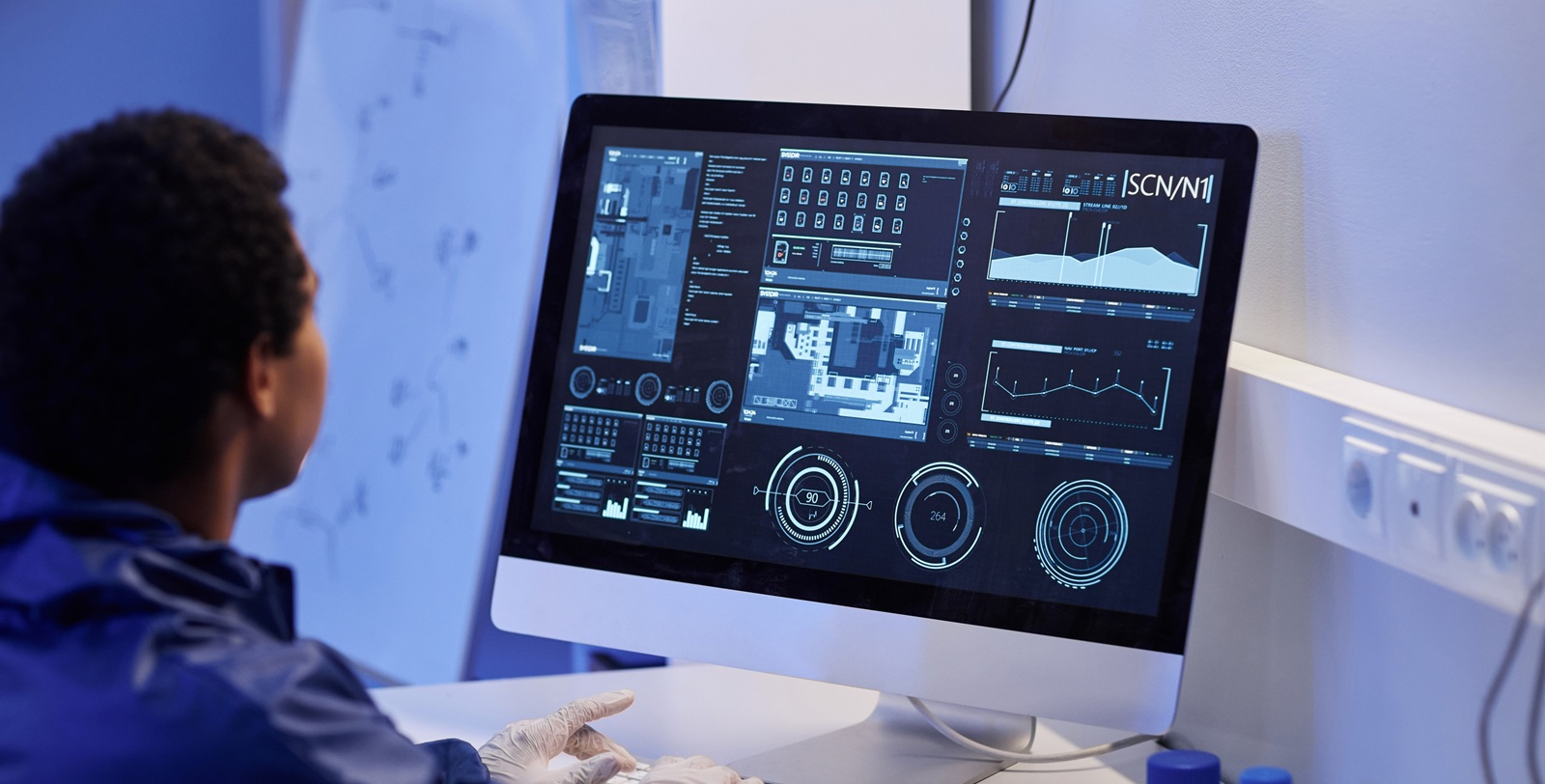
5. AI Design Forecasting: Preventing Cost and Schedule Overruns
In construction, every minute and every miscalculation carries a financial impact. Project overruns are often caused not by poor planning but by unforeseen dependencies — hidden flaws, underestimated stress tolerances, or environmental factors.
AI design forecasting addresses this by running simulations that measure how design changes ripple through cost and scheduling structures. Predictive algorithms process thousands of “what-if” scenarios to identify which parameters most influence project efficiency.
For instance, AI can predict how using a different concrete grade might extend curing time, affect structural strength, and consequently alter delivery schedules. By incorporating real-time cost data, AI design forecasting allows decision-makers to balance engineering quality with financial feasibility — before a single beam is laid.
6. Data, Algorithms, and Materials: How Predictive AI Learns Design Behavior
Unlike traditional engineering tools that rely on predefined formulas, AI systems learn dynamically. The more data they analyze, the smarter they become.
Predictive AI in design learns from three primary data streams:
- Historical Project Data: Previous designs, material performance logs, and recorded stress events create foundational learning models.
- Sensor and IoT Data: Real-time monitoring from active structures supplies continuous feedback on load, temperature, and deformation.
- Environmental Context: AI accounts for external factors such as wind, seismic activity, and moisture infiltration — translating them into adaptive models.
Machine learning algorithms — particularly convolutional neural networks (CNNs) and reinforcement learning systems — analyze this data to detect non-linear cause-effect relationships. For example, AI may discover that minor temperature fluctuations cause significant torsional movement in composite beams under certain spans — insights that would take humans months to uncover.
These discoveries feed back into the predictive loop, creating systems that evolve as they design. Over time, AI learns the “fingerprint” of successful designs — guiding engineers toward the configurations most likely to achieve performance longevity.
7. The Stealth Technology Group Advantage: Predictive Infrastructure Analytics
As predictive modeling becomes essential to modern design, firms need infrastructure capable of handling vast computational loads and data complexity. Stealth Technology Group delivers that foundation through its predictive infrastructure analytics platform, combining scalable cloud hosting, AI-driven computation, and real-time collaboration.
Our system continuously monitors model iterations, performance metrics, and risk indicators across entire design ecosystems — providing engineers with proactive intelligence rather than reactive reports.
Stealth’s Predictive Analytics Capabilities
- Real-Time Structural Insights: AI models detect emerging stress concentrations before they escalate.
- Material Intelligence: Algorithms analyze supplier data and environmental inputs to predict performance variance.
- Cost & Time Optimization: AI integrates with scheduling systems to forecast the impact of design decisions on project budgets.
- Performance Validation: Live data feedback from IoT-enabled assets ensures continuous design improvement.
- Secure Cloud Computation: Stealth’s encrypted, high-availability infrastructure guarantees reliability across global project teams.
In essence, Stealth’s predictive environment doesn’t just process information — it learns from it, helping engineers convert uncertainty into measurable advantage. By connecting AI foresight with infrastructure stability, we enable firms to design confidently, knowing that every potential weakness has already been anticipated and addressed.
8. The Future of Predictive Engineering: Continuous Intelligence
Predictive design marks the beginning of what many call the “continuous intelligence” era — a future where buildings, bridges, and cities constantly evolve through data feedback loops. Instead of a one-time project handoff, AI will allow structures to communicate their health status throughout their lifespan.
Imagine an AI system that monitors bridge vibration sensors, predicts fatigue years in advance, and automatically updates future design blueprints based on real-world performance. That’s the future Stealth is enabling.
As climate change intensifies environmental uncertainty, predictive AI will play a central role in ensuring resilience. It will allow engineers to create adaptive designs that self-optimize in response to changing conditions — reducing energy waste, extending lifespans, and enhancing sustainability at scale.
9. Challenges and Ethical Considerations in Predictive Design
While AI predictive systems bring extraordinary benefits, they also demand careful implementation. Data bias, algorithm transparency, and over-reliance on automation present real risks if not properly managed.
For example, if training data excludes certain environmental or regional variables, predictions may underrepresent unique stress factors — potentially skewing risk forecasts. Ethical frameworks must ensure that AI complements, not replaces, human expertise.
Stealth’s approach prioritizes explainable AI (XAI) — models that provide traceable reasoning for every prediction. This transparency not only builds trust but also meets compliance standards for safety and accountability in engineering design.
By combining human intuition with machine precision, firms can achieve an ideal balance: engineers remain creative decision-makers while AI serves as a tireless analytical partner.

Summary
Design excellence today depends on one principle — foresight. The ability to predict how structures will perform before they are built defines the next generation of architecture and engineering.
AI predictive design enables firms to identify weaknesses early, forecast material and cost risks, and ensure long-term stability. Through structural AI modeling and AI design forecasting, the entire design lifecycle becomes a living process of continuous improvement.
Stealth Technology Group provides the technological foundation that makes predictive intelligence possible. Our predictive infrastructure analytics integrate AI computation, performance monitoring, and data security to deliver proactive insights across global design operations.
If your firm is ready to evolve from reactive design to predictive innovation, connect with Stealth’s engineering intelligence team today.
Contact us or call (617) 903-5559 to schedule a consultation and learn how predictive analytics can strengthen every structure you design.