Michael Bannach


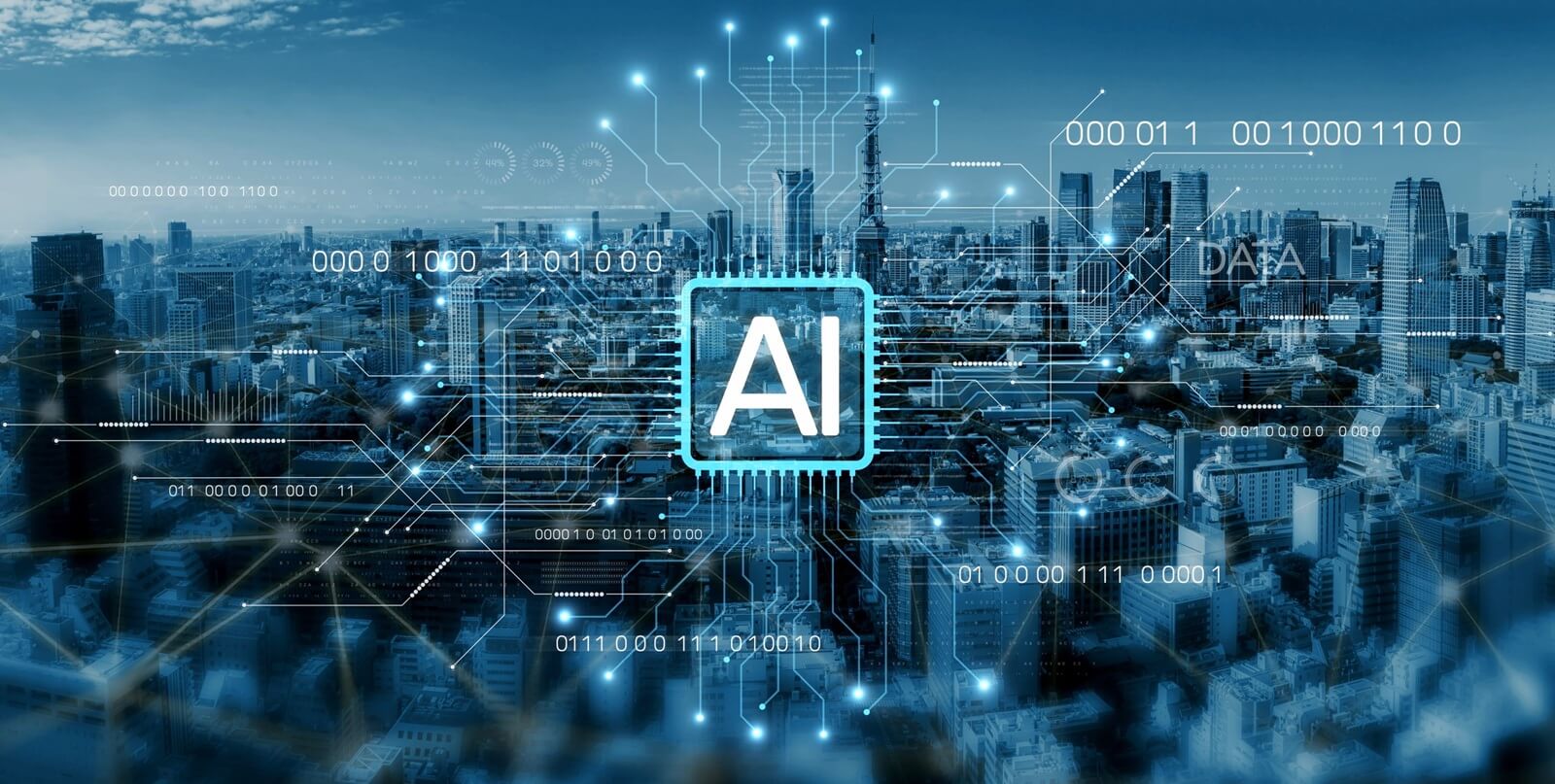
Cities are evolving faster than ever before. Urban centers are no longer static environments — they are becoming dynamic, data-driven systems that think, adapt, and respond. Behind this transformation lies one defining force: Artificial Intelligence (AI).
AI is revolutionizing how architects, engineers, and planners design and manage infrastructure. From optimizing energy distribution to predicting traffic flow and reducing environmental impact, AI enables cities to function as interconnected ecosystems. This integration is redefining the principles of urban planning — moving from reactive problem-solving to predictive, intelligent design.
At Stealth Technology Group, our AI-driven infrastructure empowers design professionals to build these smarter cities. By combining AI data analytics, scalable cloud performance, and secure hosting, we help firms model, simulate, and execute complex urban projects with precision and efficiency.
Smart cities represent more than technological advancement; they represent a vision of harmony — between human experience, environment, and engineering intelligence. AI provides the foundation that makes that vision achievable.

1. The Evolution of Urban Intelligence
Urban design has traditionally been rooted in physical space — roads, bridges, housing, and utilities. But today’s cities generate more than concrete; they produce vast streams of digital data. Sensors, IoT devices, and connected systems continuously record movement, temperature, consumption, and environmental variables.
The challenge lies not in collecting data but in interpreting it meaningfully. This is where AI enters the picture. Machine learning algorithms analyze this data in real time, identifying patterns that humans alone could never process. These insights guide decisions on energy use, waste management, and urban mobility, turning reactive cities into adaptive ones.
AI in smart cities enables what urban planners once only imagined — infrastructures that learn from human behavior and optimize themselves over time. Roads predict congestion, utilities adjust to demand, and public services respond automatically to changing conditions.
2. How AI Is Transforming Infrastructure Design
Traditional infrastructure design relies on linear processes: plan, design, test, build. But urban systems are non-linear — every road affects traffic, every structure affects wind flow, and every lighting network influences energy grids.
AI replaces this linear approach with predictive simulation and generative design. By processing millions of design iterations, AI models identify optimal configurations for both functionality and sustainability.
Engineers can now test infrastructure virtually before breaking ground — modeling how bridges withstand climate variations, how buildings affect local airflow, or how transport grids handle population growth. This reduces rework, cost, and environmental impact, while ensuring safety and longevity.
AI in smart cities transforms infrastructure design from blueprint-based planning to performance-based intelligence — where every structure is part of a self-learning network.
3. The Role of Data Analytics in Urban Decision-Making
Every smart city depends on data — and the ability to make sense of it. AI-driven analytics transforms raw urban data into actionable insights that improve planning, operations, and citizen experience.
Using engineering AI analytics, cities can predict future energy consumption, optimize public transit, or even forecast pollution levels based on traffic and weather patterns. Machine learning identifies trends and correlations, enabling proactive planning rather than reactive management.
In architecture and engineering, this analytical intelligence allows firms to assess design performance in real time. Urban modeling tools integrated with AI analytics help simulate environmental impact, traffic flow, and emergency response readiness.
The result is not just smarter cities — but smarter decision-making. AI transforms data into foresight, giving leaders the ability to plan for tomorrow’s challenges today.
4. Building Sustainable Cities with AI
Sustainability is no longer a goal — it’s an obligation. AI empowers architects and engineers to design cities that not only grow efficiently but also coexist responsibly with the planet.
Through AI urban design tools, planners can simulate carbon footprints, optimize energy-efficient materials, and design renewable energy systems. AI evaluates thousands of potential configurations, balancing energy demand with green infrastructure performance.
For instance, in climate-sensitive regions, AI can predict how shading, ventilation, and solar exposure affect building energy loads — helping architects minimize heat gain and reduce energy costs. Similarly, predictive maintenance algorithms monitor infrastructure health, identifying wear or structural weakness before it becomes a risk.
In short, sustainability powered by AI is not theoretical — it’s measurable, scalable, and repeatable across every stage of city development.
5. Integrating AI with Digital Twins
A defining advancement in smart city technology is the digital twin — a virtual replica of physical assets that mirrors their real-time performance. AI enhances digital twins by analyzing sensor data, predicting system behavior, and automating interventions.
For example, in urban water management, AI-equipped digital twins model water flow, detect leaks, and forecast consumption patterns. In transportation, they simulate traffic under various scenarios to optimize signal timings and reduce congestion.
By combining digital twins with AI, design firms gain unprecedented visibility and control over infrastructure systems — from bridges to power grids. It’s an evolution from static modeling to dynamic intelligence.
For A&E firms, Stealth’s AI hosting and data analytics infrastructure provide the computing power and scalability required to manage these massive real-time simulations securely and efficiently.
6. Overcoming Challenges in AI Urban Integration
Despite its promise, implementing AI in urban design presents real challenges. These include data interoperability, cybersecurity, and ethical governance.
Data from various systems — energy, transportation, construction — often exist in incompatible formats. AI resolves this by establishing common data models and integrating cross-platform communication protocols.
Security is another critical factor. As smart cities rely heavily on connected infrastructure, protecting sensitive operational data from cyber threats becomes vital. AI-driven threat detection systems monitor network behavior continuously, flagging anomalies and preventing breaches before they occur.
Finally, ethical considerations — privacy, transparency, and algorithmic bias — require governance frameworks that ensure accountability. AI should enhance civic well-being, not compromise it. Leading cities are now adopting ethical AI standards as part of their smart infrastructure strategies.
In all these areas, intelligent integration, not just innovation, is the key.
7. Stealth Technology Group: Powering the AI-Driven City
As the complexity of urban infrastructure grows, firms need reliable partners who can provide secure, scalable, and intelligent foundations for design and analysis. Stealth Technology Group delivers that foundation.
Stealth’s AI data analytics and cloud hosting solutions are engineered to handle the enormous computational demands of urban modeling and smart infrastructure simulation. Our systems enable:
- Predictive Performance Management: AI ensures resources scale dynamically to meet simulation and rendering demands.
- Data Security and Compliance: Multi-layer encryption and real-time threat detection safeguard sensitive urban and client data.
- Integrated Collaboration: Seamless connection between architects, engineers, and city stakeholders within one AI-optimized ecosystem.
- Sustainability Intelligence: AI tracks and optimizes energy and carbon performance across projects.
Stealth enables design firms to transform urban challenges into opportunities — creating cities that are efficient, sustainable, and human-centered. Through AI in smart cities, we don’t just support design — we empower transformation.
Summary
The cities of tomorrow are not built solely with concrete, steel, and glass — they’re built with intelligence. Artificial intelligence empowers architects and engineers to create urban environments that learn, adapt, and evolve alongside their citizens. From predictive infrastructure modeling to sustainability simulations and digital twins, AI urban design tools redefine the boundaries of what’s possible. Firms that embrace AI today are shaping the resilient, data-driven cities of the future.
Stealth Technology Group provides the foundation that makes this vision achievable — through scalable AI hosting, intelligent analytics, and secure cloud infrastructure tailored for the A&E industry. If your firm is ready to build smarter, faster, and greener with AI, connect with our team today. Contact us or call (617) 903-5559 to schedule a consultation with one of our AI infrastructure specialists.