Stealth Technology Group Team


Vulnerability management is no longer a periodic security exercise that begins with a scan and ends with a report. Modern businesses operate across cloud platforms, endpoints, applications, networks, remote users, third-party services, and distributed infrastructure. Every change can introduce a new weakness or alter the significance of an existing one. Vulnerability management as a service gives organizations a continuous operating model for discovering vulnerabilities, understanding their business context, prioritizing remediation, tracking progress, and validating that security weaknesses have actually been addressed.
What Is Vulnerability Management as a Service?
Vulnerability management as a service, often abbreviated VMaaS, is an ongoing security service in which a specialized provider helps an organization identify, assess, prioritize, remediate, and monitor vulnerabilities across its technology environment. Unlike a one-time vulnerability scan, a managed vulnerability program is designed around continuity. The provider repeatedly evaluates systems, reviews findings, helps determine which weaknesses deserve immediate attention, supports remediation workflows, and produces reporting that gives technical and business leaders visibility into changing exposure.
Why Is Vulnerability Management Important for Modern Businesses?
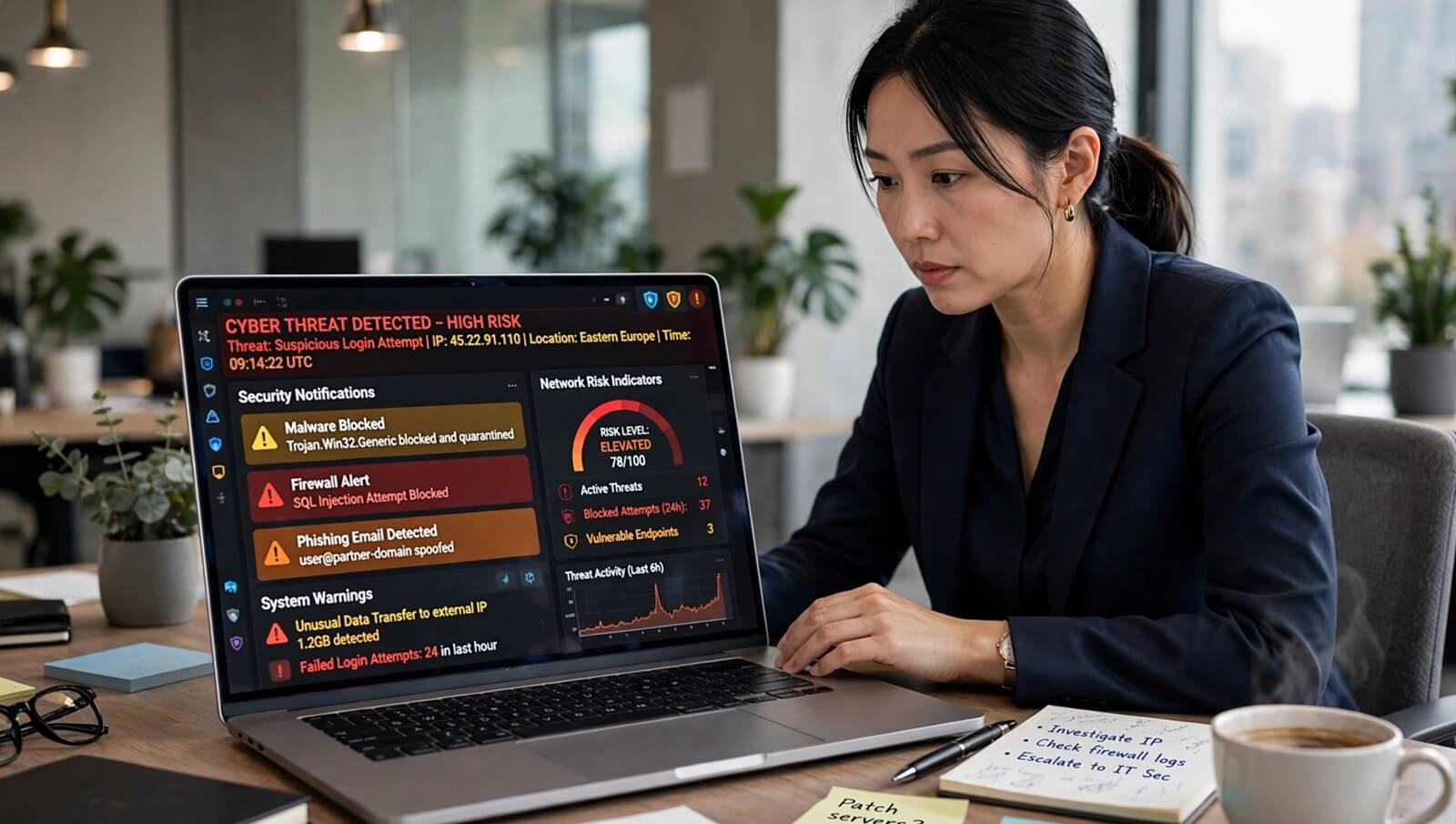
The main challenge is not finding vulnerabilities. Modern scanning technologies can identify thousands of potential weaknesses across a large environment. The harder problem is determining which findings create meaningful business risk and ensuring that the organization actually closes those gaps. A business may have a large number of low-impact findings while a smaller number of vulnerabilities on an internet-facing server, identity platform, remote access system, or business-critical application create far greater exposure.
How Does Vulnerability Management as a Service Work?
A managed vulnerability program normally begins with asset visibility. Before a provider can assess risk accurately, it needs to understand what systems exist, where they are located, what software they run, which assets are business critical, and which systems are exposed to external or internal threats. Asset discovery and inventory therefore form the foundation of the program.
The next stage is vulnerability discovery. Scanning tools identify known software vulnerabilities, missing security updates, weak configurations, unsupported software, exposed services, and other conditions that may create attack paths. Depending on the environment, assessments may be authenticated or unauthenticated, internal or external, agent-based or network-based. The provider then normalizes findings so duplicate results can be understood as part of a coherent risk picture.
The most important stage is prioritization. Findings are evaluated using severity, exploitability, asset criticality, exposure, business impact, active exploitation intelligence, and available compensating controls. Remediation activities are then assigned to responsible teams, tracked against agreed timelines, and validated after changes are made. Continuous reassessment closes the loop by determining whether the vulnerability is actually resolved or whether the underlying condition remains.
What Is the Difference Between Vulnerability Scanning and Vulnerability Management?
Vulnerability scanning is a technical activity used to discover security weaknesses. Vulnerability management is the broader process that turns those discoveries into measurable risk reduction. A scan can produce a report in a matter of hours, but that report does not tell leadership whether the most important findings were fixed, whether remediation deadlines were met, whether exceptions were formally accepted, or whether new vulnerabilities appeared after the scan.
Vulnerability management adds ownership, prioritization, remediation, validation, reporting, and continuous improvement. It also creates a feedback loop between security and IT operations. That relationship is essential because many vulnerabilities are ultimately resolved through patching, software upgrades, configuration changes, application updates, access-control changes, network segmentation, or compensating controls.
How Are Vulnerabilities Discovered?
Discovery can involve several complementary methods. Network vulnerability scanners can evaluate reachable systems and services. Endpoint agents can provide deeper visibility into operating systems and installed software. Cloud security tooling can identify vulnerable workloads and exposed configurations. Application security processes can identify weaknesses in web applications, APIs, and dependencies. External attack-surface monitoring can identify internet-facing systems that internal teams may not realize are exposed.
Discovery should also account for asset changes. New laptops, servers, cloud resources, applications, software versions, and vendor connections can appear after a scheduled assessment. A continuous or frequently recurring service helps reduce the gap between when an asset becomes vulnerable and when the organization becomes aware of it.
How Are Vulnerabilities Prioritized?
Prioritization should combine technical severity with real-world context. A CVSS score can provide a useful standardized measure of vulnerability characteristics, but it should not automatically determine the order in which every organization remediates findings. A vulnerability affecting a highly critical, internet-facing system may deserve immediate attention even if another vulnerability has a higher base score but exists only on an isolated, low-value asset.
Effective prioritization can consider whether a vulnerability is known to be exploited, whether proof-of-concept exploitation is publicly available, whether the affected asset is exposed to the internet, how important the asset is to the business, whether sensitive information is involved, whether compensating controls exist, and how easily the vulnerability can be exploited. CISA’s Known Exploited Vulnerabilities Catalog is particularly useful as one source of evidence about vulnerabilities that are being exploited in the wild.
Why Does Asset Context Matter When Managing Vulnerabilities?
Asset context is what transforms a vulnerability list into a risk-management program. A medium-severity vulnerability on an ordinary workstation may have a different practical risk from the same weakness on a domain controller, identity provider, database server, engineering file repository, or externally accessible application.
Business context should therefore be attached to vulnerability records. Useful attributes include asset owner, business function, data sensitivity, internet exposure, recovery requirements, regulatory relevance, dependency relationships, and whether the system is considered mission critical. This context helps security and IT teams focus limited remediation capacity where it can reduce the most meaningful exposure.
How Does Patch Management Fit Into Vulnerability Management?
Patch management is one of the most important remediation mechanisms in a vulnerability management program. When a vendor releases a security update, the organization must determine which systems are affected, assess operational impact, test where appropriate, deploy the update, and verify that the vulnerable condition has been removed.
NIST SP 800-40 Rev. 4 describes enterprise patch management as preventive maintenance and emphasizes the importance of identifying, prioritizing, acquiring, installing, and verifying patches. A managed vulnerability service can connect this process to vulnerability findings so that security weaknesses are not merely reported but routed into an operational remediation workflow.
How Does Vulnerability Management Help Reduce Ransomware Risk?
Vulnerability management can reduce one important part of ransomware risk by helping organizations identify and remediate weaknesses that attackers may use for initial access, privilege escalation, lateral movement, or access to critical systems. It does not eliminate ransomware risk because attacks can also begin through stolen credentials, phishing, malicious insiders, supply-chain compromise, and other paths.
The strongest approach combines vulnerability remediation with identity security, endpoint detection, network segmentation, backups, monitoring, and tested recovery procedures. Attackers often look for the easiest path through an environment, so reducing known exploitable weaknesses can remove opportunities before they are used.
How Should Businesses Measure Vulnerability Management Performance?
A vulnerability management service should be measured using operational outcomes rather than the number of scans performed. Useful measures include the percentage of critical assets covered by scanning, the number of critical and high-risk vulnerabilities, mean time to remediate, aging of unresolved findings, remediation SLA compliance, recurring vulnerabilities, exception volume, and the percentage of findings successfully verified after remediation.
Trend data is particularly valuable. If critical vulnerabilities are consistently decreasing, remediation time is improving, asset coverage is increasing, and overdue findings are falling, the organization has evidence that the program is improving its exposure. If the number of vulnerabilities rises sharply, the increase should be investigated rather than automatically interpreted as a security failure because better asset discovery or expanded scanning coverage can also increase the number of findings.
What Are Common Vulnerability Management Mistakes?
One common mistake is treating every vulnerability as equally urgent. This can overwhelm IT teams and make it difficult to focus on the findings that create the greatest business exposure. Another is scanning without a reliable asset inventory, which creates blind spots and makes it difficult to determine whether the organization has actually covered its critical environment.
Organizations can also struggle when security and IT operations do not share ownership of remediation. Security teams may identify vulnerabilities while infrastructure teams are responsible for patching them, creating a gap between discovery and action. Other common problems include accepting exceptions without expiration dates, failing to verify remediation, ignoring unsupported software, and treating cloud and third-party assets as outside the normal vulnerability management process.
When Should a Business Use Vulnerability Management as a Service?
VMaaS can be useful when an organization lacks the internal staff, tools, expertise, or operational capacity to maintain a mature vulnerability program. It can also be appropriate for businesses that have security tooling but need additional expertise to interpret findings, prioritize remediation, manage workflows, and produce consistent reporting.
The model can be especially useful for organizations with hybrid infrastructure, multiple offices, remote employees, cloud workloads, compliance obligations, or a large number of endpoints. A managed provider can help standardize vulnerability processes across those environments while giving internal IT teams a clear remediation queue instead of an unstructured list of scan results.
What Should Businesses Look for in a Vulnerability Management Provider?
A provider should offer more than access to a scanning platform. Businesses should look for demonstrated capability in asset discovery, authenticated and unauthenticated scanning, risk-based prioritization, remediation coordination, patch management, cloud environments, endpoint security, reporting, and validation. The provider should also explain how vulnerabilities are escalated, how remediation deadlines are defined, how exceptions are handled, and how management receives evidence of progress.
Integration matters as well. Vulnerability findings should connect with the organization’s existing IT and security processes rather than creating another isolated dashboard. The strongest provider relationships connect vulnerability management with managed IT, cybersecurity monitoring, cloud security, compliance, backup, and incident response so that remediation becomes part of normal operations.
How Does Vulnerability Management Support Engineering and High-Value Data Environments?
Engineering firms, manufacturers, professional services organizations, and other businesses that manage valuable intellectual property often operate specialized applications, large file repositories, remote access systems, and complex infrastructure. A vulnerable workstation or server in these environments can expose not only the device itself but also project files, credentials, intellectual property, and connected systems.
How Does Vulnerability Management Fit Into a Broader Cybersecurity Strategy?
Vulnerability management should be one layer of a broader cybersecurity program. NIST Cybersecurity Framework 2.0 provides a high-level structure for managing cybersecurity risk across organizations, while vulnerability management contributes practical evidence about weaknesses in technology assets and the progress being made to address them.
The broader strategy should connect vulnerability data with identity security, endpoint protection, network security, cloud security, security monitoring, backup and recovery, incident response, and governance. This creates a more complete understanding of risk than any single security tool can provide.
What Does a Mature Vulnerability Management Program Look Like?
A mature vulnerability management program maintains an accurate view of the attack surface, continuously identifies weaknesses, prioritizes them according to technical and business context, assigns clear remediation ownership, tracks deadlines, validates fixes, and communicates trends to leadership. It does not depend on an annual scan or a static spreadsheet. It operates as an ongoing cycle in which discovery, prioritization, remediation, verification, and monitoring continuously inform one another.
Maturity also means that the organization can explain why a vulnerability has not been fixed. There should be a documented reason, a defined owner, a compensating control where appropriate, and a review date. This level of discipline helps prevent temporary exceptions from becoming permanent weaknesses.
Conclusion
Vulnerability management as a service gives businesses a practical way to move from periodic vulnerability scanning to continuous exposure management. The value comes from the complete process: maintaining asset visibility, identifying vulnerabilities, applying business context, prioritizing realistic risks, coordinating remediation, verifying fixes, and continuously monitoring for new weaknesses.
The most effective programs also recognize that vulnerability management is not an isolated security function. It connects directly to patch management, cloud security, endpoint management, infrastructure operations, compliance, ransomware preparedness, and business continuity. When these functions operate together, organizations can make better use of limited remediation resources and maintain a clearer understanding of how technology changes affect their security posture.
Stealth Technology Group helps organizations build and manage secure technology environments through managed IT, cybersecurity, cloud, compliance, infrastructure, and strategic technology services. If your organization needs help identifying vulnerabilities, prioritizing remediation, improving patch management, or building a continuous vulnerability management program, contact Stealth Technology Group to discuss a security strategy designed around your environment and business requirements.