Stealth Technology Group Team


The moment a business’s IT infrastructure started existing in more than one physical location — the moment a second office opened, a cloud workload went live, or a remote employee started working from home on company systems — the model of walking to a server room to fix something stopped being sufficient. Managing infrastructure remotely is no longer an optional capability for organizations with any operational complexity. It’s the operational baseline.
What varies enormously is how well it gets done. Remote infrastructure management ranges from a reactive help-desk model where someone logs in when something breaks to a genuinely proactive operational discipline where issues are identified, addressed, and documented before they affect users, and where the people managing the infrastructure know it well enough to make sound decisions about change, capacity, and risk. The gap between those two models is what most mid-market organizations experience as the gap between IT that enables the business and IT that the business constantly works around.
This guide covers what remote infrastructure management actually involves at the operational level, what it means for organizations in regulated industries where infrastructure failures and security gaps carry compliance consequences, and what to look for in a provider who will manage it well.
What Remote Infrastructure Management Actually Covers
The term “remote infrastructure management” is broad enough to mean different things in different contexts, so it’s worth being specific about what a comprehensive RIM program covers — because the scope of management directly determines the scope of what gets caught, addressed, and maintained.
At its core, RIM encompasses the continuous monitoring, maintenance, and support of an organization’s IT infrastructure from a remote operations center — without requiring on-site presence for routine work. The infrastructure in scope typically includes servers (physical and virtual, on-premises and cloud), network devices (routers, switches, firewalls, wireless access points), endpoints (workstations, laptops, mobile devices), storage systems, backup infrastructure, cloud environments, and the applications and services that run on all of the above.
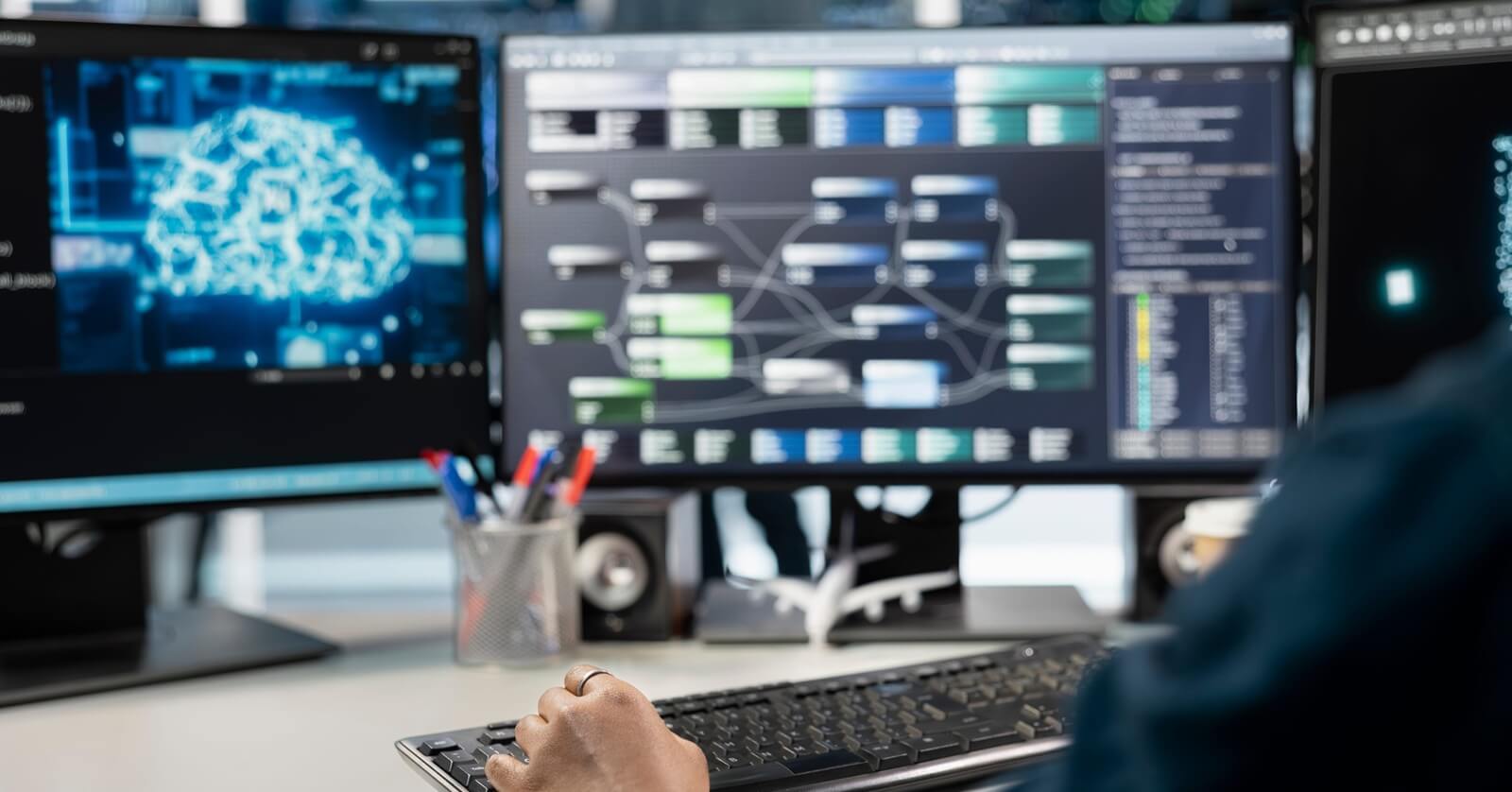
The monitoring component means that every device in scope is sending telemetry — health metrics, performance data, event logs, alert conditions — to a centralized management platform where it can be evaluated against baselines and thresholds. A server whose CPU utilization has been trending upward for three weeks is a capacity planning conversation that proactive monitoring surfaces before it becomes a performance incident. A firewall configuration change that inadvertently opens a port that should be closed is a security event that monitoring detects before an attacker finds it. An endpoint that hasn’t checked in with the patch management system for 30 days is a compliance gap and a security risk that monitoring makes visible before it compounds.
The maintenance component means that the routine work of keeping infrastructure healthy — patching, configuration management, backup verification, certificate renewal, capacity management, hardware health monitoring — happens on a defined schedule, documented to a standard that provides evidence it occurred. This is the component that most commonly differentiates a mature RIM program from an informal one: in a mature program, maintenance is scheduled, executed, and documented. In an informal one, it happens when someone remembers or when something breaks.
The support component means that when users or systems encounter problems, there’s a defined process for identifying, escalating, and resolving them — with tracking that maintains accountability from ticket open to ticket close and generates the service history that informs capacity planning, vendor management, and infrastructure investment decisions.
Why Regulated Organizations Have Specific RIM Requirements
For organizations in regulated industries — defense contractors under CMMC, healthcare organizations under HIPAA, financial services firms under GLBA and SOX, legal practices with client confidentiality obligations — remote infrastructure management isn’t just an operational efficiency function. It’s a compliance function.
The controls that compliance frameworks require aren’t abstract policy commitments. They’re operational practices that need to be executing continuously and documented in a way that demonstrates to auditors and assessors that they actually execute. Configuration management baselines need to be maintained and verified. Patch management SLAs need to be defined and met. Access to infrastructure management tools needs to be controlled and logged. Audit logs need to be generated, retained, and reviewed. Backup integrity needs to be verified through tested recovery. Every one of these requirements is satisfied — or not — by how remote infrastructure management is actually practiced.
For defense contractors specifically, the intersection of RIM and CMMC compliance is direct and significant. CMMC Level 2’s Configuration Management domain requires that baseline configurations be established, maintained, and verified against in-scope systems. The Audit and Accountability domain requires that system events be logged and that logs be reviewed on a defined schedule. The System and Information Integrity domain requires that patches be applied within defined timeframes and that systems be monitored for security events. These aren’t separate compliance activities that sit alongside the RIM program — they are the RIM program, when it’s done with compliance requirements in mind.
The CMMC compliance program at Stealth Technology Group is built around this integration — where remote infrastructure management practices are designed from the start to produce the compliance evidence that CMMC assessors look for, rather than running security and compliance as a separate layer on top of IT operations that doesn’t quite connect.
The compliance implications extend to vendor relationships within the infrastructure management function. A managed services provider with remote access to infrastructure in a CMMC-scoped environment is a vendor inside the compliance boundary — they need to meet the security and access control requirements that CMMC imposes on such relationships. This is a point that many organizations miss when they engage general managed services providers without evaluating their CMMC compliance posture, and it creates a gap that assessors consistently find. Our guide on how third-party vendors affect your CMMC compliance covers this specifically.
The Monitoring Stack: What Gets Watched and How
A mature remote infrastructure management program runs on a monitoring stack that provides continuous visibility across every layer of the infrastructure — not just the devices that are obvious to IT staff but every component that could affect performance, security, or compliance.
Network monitoring covers availability and performance of routers, switches, firewalls, and wireless infrastructure. Latency, packet loss, bandwidth utilization, interface errors, and device health metrics are continuously collected and evaluated against baselines. A network switch that’s dropping packets intermittently produces user complaints that are hard to diagnose without network monitoring data; with it, the root cause is typically identifiable within minutes.
Server and endpoint monitoring covers the health and performance of every managed system — CPU, memory, disk utilization, service status, application health, and event log activity. Thresholds that trigger alerts when metrics exceed defined values turn reactive troubleshooting into proactive intervention: a disk that’s 85% full gets a ticket before it fills to capacity and causes a service failure, not after.
Security monitoring within the RIM program covers the events and configurations that determine whether systems are operating securely. This includes patch status monitoring that tracks whether systems have received required updates within defined SLAs, configuration compliance monitoring that verifies deployed configurations against documented baselines, and log forwarding that ensures security-relevant events are captured and available for the security monitoring function.
Cloud infrastructure monitoring covers the cloud environments that most mid-market organizations now run alongside or instead of on-premises infrastructure. Azure resource health, AWS service status, Microsoft 365 service activity, and the cloud-native security controls that protect cloud workloads all require monitoring integration that cloud-native tools provide when properly configured. Organizations that monitor on-premises infrastructure well but have limited visibility into their cloud environments have an increasingly significant monitoring gap as workloads migrate. The cloud transformation work that moves workloads to modern cloud platforms should always include configuring the monitoring integration that maintains visibility after the migration.
Backup monitoring is the component that most commonly reveals gaps between assumed and actual recovery capability. A backup job that completes with warnings rather than errors, that backs up some but not all of the defined data sources, or that hasn’t been tested for recovery integrity in several months represents a recovery risk that monitoring makes visible. The backup and data recovery infrastructure that protects against ransomware and hardware failures only works when its operation is actively monitored and verified.
Patch Management: The Maintenance Function That Determines Security Posture
Patch management is the remote infrastructure management function with the most direct and documented impact on security outcomes. The majority of successful cyberattacks exploit known vulnerabilities for which patches are available — meaning that organizations with current patch status are materially more resistant to the most common attack techniques than those with patch backlogs.
A mature RIM patch management program has several characteristics that distinguish it from informal patching. It operates on a defined schedule — monthly at minimum for routine patches, accelerated for critical vulnerabilities that represent active exploitation risk. It covers the full scope of managed endpoints including servers, workstations, and network devices, and includes third-party application patching alongside operating system patching since applications are often the more exploited vector. It tracks patch compliance at the device level, producing reports that show which systems are current and which have open patches beyond their SLA. And it documents the process in a way that generates the evidence that compliance frameworks require.

The third-party application patching requirement deserves specific emphasis because it’s where patch management programs most commonly fall short. Windows Update addresses Microsoft operating system and application patches. It doesn’t patch Adobe Acrobat, Java, Chrome, Firefox, 7-Zip, or any of the dozens of third-party applications that every workstation typically runs and that vulnerability scanners consistently find with critical or high-severity findings. An enterprise patch management tool that extends coverage to third-party applications is a necessary component of a mature RIM program, not an optional add-on.
For organizations subject to CMMC, the vulnerability remediation SLA tracking that patch management produces is directly relevant to the Risk Assessment domain requirements. Assessors look specifically for evidence that vulnerability findings are remediated within defined timeframes — and the patch management reports that a mature RIM program generates are exactly that evidence. Our guide on CMMC and NIST 800-171 critical controls covers the patch management requirements in context with the other controls that assessors evaluate most closely.
Configuration Management: Maintaining What You’ve Built
Configuration management is the discipline that prevents the gradual erosion of security and performance baselines that happens when systems change without oversight. Every change to a system — a software installation, a configuration modification, a network rule addition — is a potential deviation from the documented baseline that the RIM program is responsible for maintaining.
A mature configuration management practice within a RIM program establishes documented baselines for each system type in scope, deploys those baselines consistently to new systems, and monitors deployed systems against their baselines on a continuous or scheduled basis. When a system deviates from its baseline — because of an unauthorized change, a software update that modifies a configuration, or a drift that accumulated from multiple small changes — the deviation is detected, investigated, and either corrected or formally authorized through the change management process.
The change management process is the governance mechanism that keeps configuration management honest. Changes to production infrastructure that happen outside the change management process — the “quick fix” that gets applied directly without a change record — are the primary source of configuration drift. A RIM program that enforces change management for all production changes, including the routine ones that seem too small to require formal documentation, maintains the configuration integrity that both operational stability and compliance require.
For manufacturing organizations where production systems have specific configuration requirements tied to equipment calibration and process qualification, configuration management takes on operational significance beyond IT security. Changes to production system configurations that aren’t properly managed and documented can affect product quality, production records, and regulatory compliance in ways that extend well beyond the IT security implications. The co-managed IT model that embeds external IT expertise alongside internal operations staff is particularly well-suited to these environments, where the IT management function needs to respect operational constraints that a pure IT perspective might not recognize.
Remote Access Management: Governing How Infrastructure Gets Touched
Remote infrastructure management requires remote access — and remote access to infrastructure, particularly infrastructure in a regulated environment, requires governance that most informal management arrangements don’t have.
The remote access model for managed infrastructure typically involves dedicated remote access tools — remote monitoring and management (RMM) platforms, privileged access management solutions, secure remote desktop services — that provide audited, controlled access to managed systems without the broad network access that traditional VPN connections create. These tools log every remote session, record the activity that occurs during sessions, and enforce multi-factor authentication for access regardless of where the management session originates.
For organizations in CMMC scope, the remote access controls that govern managed services provider access directly satisfy several CMMC access control requirements — specifically the requirements around controlling remote access, monitoring remote sessions, and limiting access to the minimum necessary for the management function. A managed services provider whose remote access is governed by an RMM platform with session recording and privileged access management provides both security and compliance evidence simultaneously; one whose access is through a simple shared VPN credential provides neither.
The vendor access governance question — who has access to what, under what conditions, with what logging, and with what contract terms governing their obligations — is the RIM governance question that compliance programs most commonly overlook until an assessor raises it. Building that governance into the managed services relationship from the beginning, rather than retrofitting it when compliance requires it, is significantly less expensive and disruptive than the alternative. Our cybersecurity program framework specifically addresses how vendor access is governed within compliant infrastructure management arrangements.
Disaster Recovery as an RIM Function
Disaster recovery capability is often treated as a separate program from remote infrastructure management, but the operational connection between them is tight enough that separating them creates gaps. The backup infrastructure that disaster recovery depends on is managed within the RIM program. The recovery procedures that disaster recovery plans document are executed using the same tools and access mechanisms that remote infrastructure management uses daily. And the recovery testing that validates disaster recovery capability requires the same infrastructure knowledge and access that the RIM team has as a matter of course.
A mature RIM program treats disaster recovery readiness as an ongoing operational responsibility rather than a periodic project. Backup integrity is monitored and verified continuously. Recovery procedures are tested on a defined schedule with documented results. Recovery time and recovery point objectives are established and verified through actual recovery tests rather than theoretical estimates. And when recovery is needed — because of ransomware, hardware failure, or data corruption — the RIM team executes it from a position of practiced familiarity rather than ad-hoc improvisation.
The ransomware recovery plan guide covers the specific requirements of ransomware-scenario recovery in depth. The key point for RIM purposes is that the backup architecture decisions, the monitoring practices, and the documented procedures that make ransomware recovery achievable are all components of the RIM program — which means the quality of the RIM program directly determines the quality of the recovery outcome when ransomware strikes.
For engineering firms where project data, CAD files, and technical documentation represent years of intellectual work that cannot be recreated, the recovery objectives are specific and demanding. A recovery program that restores systems but not current project data within an acceptable timeframe isn’t meeting the business requirement. The backup and data recovery architecture for engineering environments needs to specifically account for large file repositories, version control systems, and the application configurations that make recovered project files usable rather than just accessible.
What Separates a Good RIM Provider From a Monitoring Contract
The gap between a remote infrastructure management provider who actively manages infrastructure and one who monitors it and responds when called is significant in operational outcomes and almost invisible in service descriptions. Both describe themselves as managed services providers. Both will discuss monitoring tools and support processes. The difference shows up in what actually happens to the infrastructure over time.
A reactive monitoring contract means someone gets an alert when something fails and logs in to fix it. The infrastructure is never proactively reviewed for capacity trends, configuration drift, or maintenance gaps unless something breaks. Patch levels fall behind because patching requires scheduled work that isn’t built into the contract. Configurations drift because change management isn’t enforced. And the client’s IT environment gradually accumulates technical debt that manifests as recurring incidents, security vulnerabilities, and compliance gaps.
A genuine RIM program means the infrastructure receives scheduled attention whether or not anything has broken — monthly maintenance windows for patching, quarterly configuration reviews against documented baselines, annual disaster recovery tests with documented results, and ongoing capacity trend analysis that informs hardware and cloud resource planning. The client’s infrastructure is maintained, not just monitored.
When evaluating providers, the operational questions that reveal the difference are: what does your maintenance schedule look like, and can you show us records from engagements with similar clients? How do you handle patch management for third-party applications, not just operating systems? What is your change management process for infrastructure modifications, and how are changes documented? How often do you test backup recovery, and what does the test documentation look like? These questions don’t have impressive marketing answers — they have operational answers that either reflect a mature practice or reveal its absence.
For non-profit organizations that depend on IT infrastructure for program delivery but have limited budgets for IT investment, the RIM value proposition is particularly compelling: the consistency of a managed program prevents the expensive emergency responses that reactive IT generates, producing lower total IT cost alongside better operational reliability. For healthcare organizations where system availability directly affects patient care and where HIPAA compliance requires documented IT controls, the compliance evidence that a mature RIM program produces is as valuable as the operational reliability.
Organizations in Boston, Tampa, and Sarasota working with Stealth Technology Group benefit from a managed IT services model that integrates remote infrastructure management with cybersecurity monitoring, compliance evidence management, and strategic IT leadership — under one accountable team rather than separate vendor relationships that require the client to coordinate across different tools, different contacts, and different accountability structures.

Conclusion: Infrastructure Management Is Either Proactive or It’s Reactive — There Is No Third Option
The infrastructure that a business runs on doesn’t maintain itself. It accumulates configuration drift, falls behind on patches, fills disks, generates logs that nobody reviews, runs backup jobs that nobody tests, and gradually moves from a position of operational health to one of latent risk — unless someone is actively managing it on a schedule, against documented standards, with evidence that the work actually happened.
Remote infrastructure management done well is that active management function — the operational discipline that keeps infrastructure current, documented, monitored, and recoverable, and that produces the evidence of that discipline in a form that compliance assessors can verify and leadership can trust. Done poorly, it’s a monitoring dashboard that nobody acts on until the incident that could have been prevented finally occurs.
For regulated mid-market organizations where the stakes of infrastructure failures include both operational disruption and compliance consequences, the quality of the RIM program is a business risk question, not just an IT operations question.
If your organization is planning its CMMC compliance journey, contact Stealth Technology Group today at (617) 903-5559 or visit the website to learn how modern cybersecurity infrastructure can accelerate your path toward certification readiness.