Stealth Technology Group Team


Modern organizations depend heavily on reliable technology infrastructure to maintain daily operations, deliver services to customers, and support internal collaboration. However, maintaining and managing complex IT environments can be challenging, particularly for companies that must balance operational priorities with technology oversight. Many organizations are therefore turning to comanaged and outsourced IT services as a practical way to strengthen their technology capabilities without overburdening internal teams.
Businesses often reach a point where internal IT staff cannot handle every aspect of infrastructure management, cybersecurity monitoring, cloud administration, and end user support. At the same time, completely outsourcing technology operations may not always be the best option if companies want to retain strategic oversight. This is where comanaged and outsourced IT services provide valuable flexibility.
Comanaged IT models allow internal teams and external providers to collaborate on infrastructure management, sharing responsibilities while maintaining internal control. Building Flexible Technology Support for Modern Businesses, on the other hand, allow organizations to delegate day to day technology management entirely to specialized providers. Both approaches help businesses improve operational stability while reducing the risks associated with managing complex digital environments.

Understanding the Difference Between Comanaged and Outsourced IT Services
Organizations evaluating IT support strategies often encounter two common models: comanaged services and fully outsourced services. Although both approaches involve external IT expertise, they serve different operational needs.
Comanaged and outsourced IT services differ primarily in how responsibilities are distributed between internal teams and external providers. In a comanaged model, internal IT professionals continue to oversee strategic decisions while external specialists provide additional technical expertise, monitoring, and operational support. This collaborative approach allows organizations to retain internal knowledge while benefiting from external resources.
Fully outsourced services transfer most IT responsibilities to an external provider. The service provider manages infrastructure monitoring, cybersecurity protection, system updates, and helpdesk support. This model works well for organizations that lack dedicated internal IT staff or prefer to focus entirely on their core business functions. By understanding how comanaged and outsourced IT services differ, organizations can select the approach that best aligns with their operational structure and long term technology strategy.
Addressing IT Resource Limitations in Growing Organizations
As organizations grow, their technology environments often expand faster than their internal IT capabilities. New applications, cloud platforms, cybersecurity requirements, and remote work technologies increase the complexity of IT operations. Internal IT teams frequently struggle to maintain oversight across all systems while also supporting employees and implementing new technology initiatives. This gap between operational demands and available resources is one of the primary reasons companies adopt comanaged and outsourced IT services.
External IT providers bring specialized expertise and monitoring capabilities that complement internal teams. Tasks such as network monitoring, patch management, and security analysis can be handled by managed service providers, allowing internal staff to focus on strategic initiatives and business innovation. By augmenting internal resources with external expertise, organizations ensure their technology environments remain stable and secure as operational complexity increases.
Enhancing Cybersecurity Through Managed Support
Cybersecurity has become one of the most critical responsibilities for modern organizations. Businesses face constant threats from ransomware attacks, phishing campaigns, credential theft, and system vulnerabilities. Maintaining strong cybersecurity defenses requires continuous monitoring, vulnerability management, and rapid incident response capabilities. Many internal IT teams lack the capacity to maintain round the clock security oversight.
Comanaged and outsourced IT services strengthen cybersecurity by integrating specialized security operations into daily infrastructure management. External providers monitor network activity, analyze system logs, and identify anomalies that may indicate emerging threats.
Security frameworks implemented through managed services often include endpoint protection, firewall management, identity access control, and threat intelligence monitoring. These controls work together to create layered defenses that reduce the likelihood of successful cyberattacks. By combining internal oversight with external expertise, organizations can maintain stronger security posture while reducing operational risk.
Improving Infrastructure Performance and Reliability
Reliable IT infrastructure is essential for maintaining productivity and customer satisfaction. System outages, slow applications, or connectivity problems can disrupt business operations and create costly downtime.
Organizations implementing comanaged and outsourced IT services benefit from proactive infrastructure monitoring that identifies issues before they escalate into disruptions. Monitoring tools track server performance, network health, storage capacity, and application responsiveness continuously.
When anomalies appear, managed service providers can address problems early through remote remediation or preventive maintenance. This proactive approach reduces downtime and ensures that employees can rely on technology systems to perform consistently. Infrastructure optimization also improves efficiency by ensuring that computing resources are allocated appropriately across workloads. Balanced infrastructure environments experience fewer performance bottlenecks and maintain stable system operations.
Supporting Cloud and Hybrid Technology Environments
Cloud computing has become a central component of modern business technology strategies. Organizations now operate across a combination of on premise infrastructure, cloud platforms, and remote collaboration systems. Managing hybrid environments requires specialized expertise to ensure secure connectivity, data synchronization, and consistent performance across platforms. Comanaged and outsourced IT services help organizations manage these complex environments by providing oversight across both internal and cloud infrastructure.
Managed service providers assist with cloud configuration, data migration, identity management, and platform monitoring. These services ensure that applications remain accessible while protecting sensitive data stored in cloud environments. Cloud management also includes optimizing resource utilization to control costs and improve application performance. By monitoring cloud infrastructure continuously, providers help organizations maintain efficient digital environments that support growth and innovation.

Delivering Consistent End User Support
Reliable end user support is a critical operational requirement because employees depend on technology tools to complete daily tasks, collaborate with colleagues, and deliver services to customers. When systems malfunction or access problems occur, productivity can quickly decline if support resources are not readily available. Implementing comanaged and outsourced IT services allows organizations to maintain consistent assistance for employees while ensuring technical issues are addressed efficiently.
Key advantages of structured end user support include:
- Providing dedicated helpdesk teams that respond quickly to employee technical issues such as login failures, application errors, connectivity problems, or device malfunctions, reducing the amount of time employees spend waiting for assistance.
- Resolving software troubleshooting requests related to productivity tools, accounting platforms, collaboration systems, and other business applications that employees rely on to perform daily responsibilities.
- Addressing system access issues by assisting employees with password resets, authentication challenges, and account configuration problems that may prevent access to critical business platforms.
- Supporting hardware troubleshooting and configuration for workstations, laptops, mobile devices, and peripheral equipment used throughout the organization.
- Allowing external managed service providers to handle routine support tickets in comanaged and outsourced IT services environments so internal IT teams can focus on strategic initiatives, infrastructure improvements, and digital transformation projects.
- Ensuring employees receive timely technical assistance through centralized support channels that streamline ticket tracking, issue resolution, and communication with users.
- Reducing operational downtime caused by unresolved technical issues, which helps maintain consistent employee productivity and prevents disruptions to business workflows.
- Improving employee confidence in organizational technology systems because reliable support ensures that problems are addressed quickly and effectively.
By implementing structured helpdesk services within comanaged and outsourced IT services frameworks, organizations create stable technology environments that support employee productivity while ensuring technical issues are resolved efficiently.
Creating Scalable IT Operations for Business Growth
Technology environments must evolve as organizations expand their operations. New offices, additional employees, and increased data volumes place growing demands on IT infrastructure. Scalability is therefore a key advantage of comanaged and outsourced IT services. Managed service providers help organizations plan infrastructure upgrades, implement new technologies, and optimize system performance to support growth.
Proactive capacity planning allows organizations to anticipate infrastructure requirements rather than reacting to performance limitations after they occur. Monitoring tools track usage patterns and identify when systems approach capacity thresholds. This foresight ensures that infrastructure investments align with business growth strategies, allowing organizations to expand confidently without experiencing operational disruption.
Aligning Technology Strategy With Business Objectives
Technology decisions increasingly influence overall business strategy. Digital transformation initiatives, automation technologies, and cloud adoption all require careful planning to ensure they deliver meaningful business value. Organizations using comanaged and outsourced IT services gain access to strategic IT guidance that helps align technology initiatives with organizational goals. IT consultants analyze infrastructure performance, evaluate emerging technologies, and recommend solutions that improve efficiency.
Strategic planning ensures that technology investments support long term growth rather than creating unnecessary complexity. Businesses can adopt new tools and platforms gradually while maintaining stable operations. By combining operational management with strategic guidance, managed services help organizations build technology environments that support innovation and competitive advantage.
The Role of Stealth Technology Group
Stealth Technology Group delivers comanaged and outsourced IT services designed to help organizations maintain secure, scalable, and high performing technology environments. Through proactive monitoring, infrastructure optimization, and cybersecurity integration, Stealth supports businesses that require reliable IT operations without overwhelming internal teams.
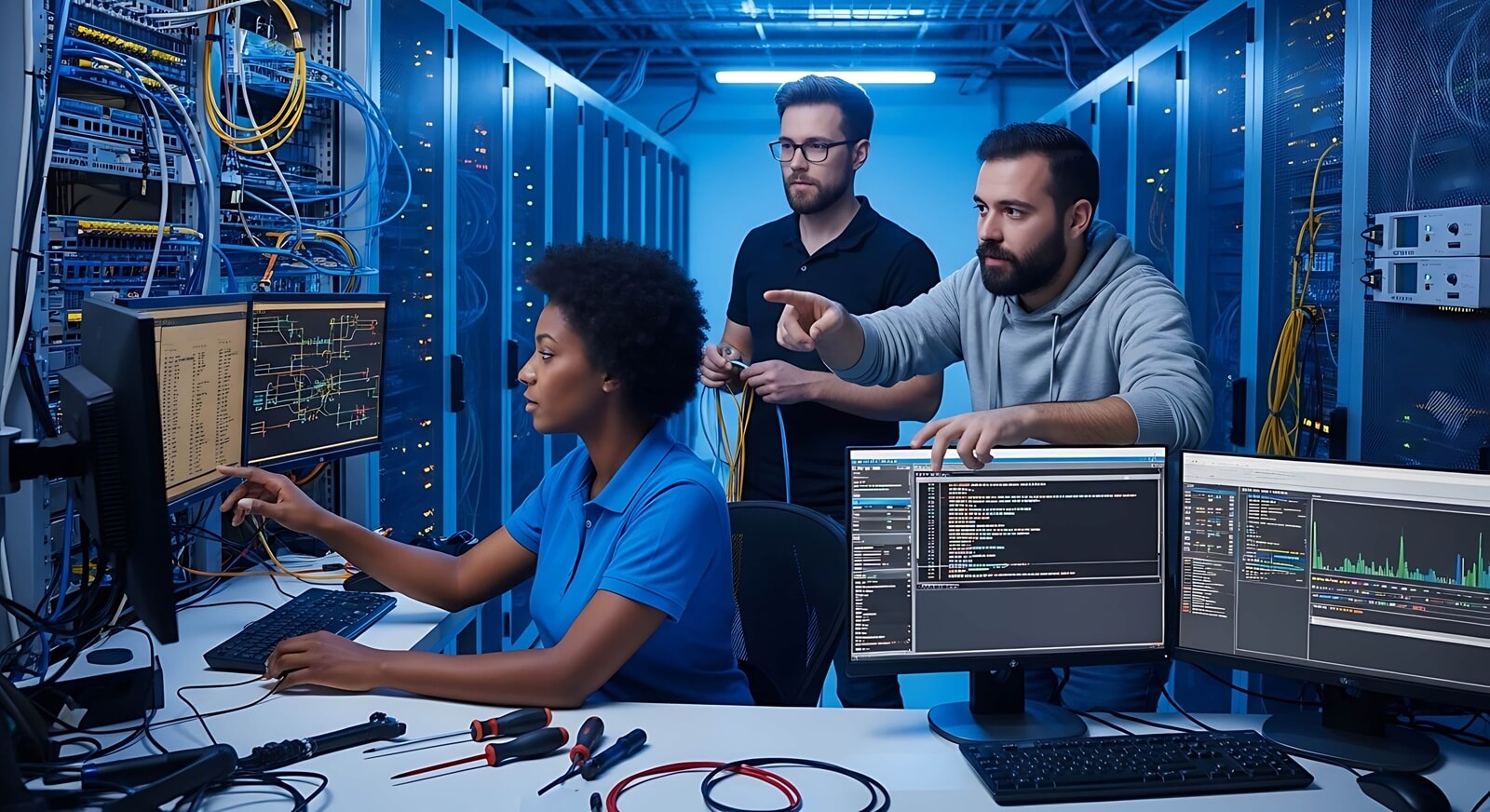
Stealth works collaboratively with internal IT departments in comanaged environments, providing specialized expertise and operational support while allowing organizations to retain strategic oversight. For companies that prefer a fully managed model, Stealth provides comprehensive outsourced IT management that includes infrastructure monitoring, security operations, helpdesk support, and cloud administration.
By combining advanced monitoring platforms, secure infrastructure design, and continuous performance optimization, Stealth enables organizations to operate confidently in complex digital environments. Businesses gain the flexibility to scale operations while maintaining the stability and security required for long term success.
Conclusion
Organizations today face increasing pressure to maintain reliable technology environments while adapting to evolving cybersecurity threats and digital transformation initiatives. Internal IT teams alone often struggle to meet these growing demands.
Comanaged and outsourced IT services provide the flexibility needed to address these challenges by combining internal knowledge with external expertise. Through proactive monitoring, cybersecurity management, infrastructure optimization, and strategic planning, managed services create stable technology environments that support business growth.
Stealth Technology Group helps organizations implement effective IT support strategies through secure infrastructure, proactive monitoring, and scalable managed services designed to simplify technology management. To learn how comanaged and outsourced IT services can strengthen your organization’s technology operations, contact us today or speak with a specialist at (617) 903-5559, because modern businesses deserve IT environments that enable growth rather than create complexity.